Managing Through Change – A Gender Lens
Insights from the Women in Rail Corporate Members Event
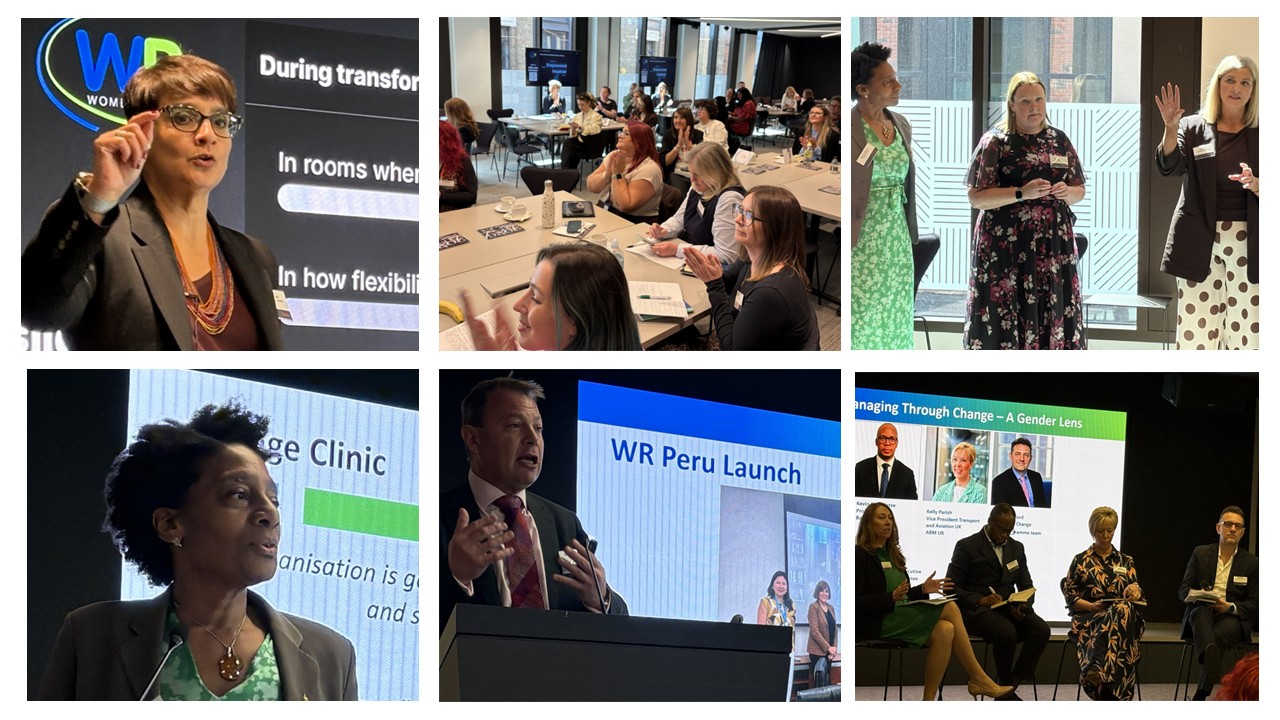
The Women in Rail Corporate Members Event Managing Through Change – A Gender Lens brought together senior leaders, partners and industry experts for a day focused on one of the defining challenges facing the rail sector today, managing through change. With reform, technological advancement and shifting workforce expectations all happening very quickly, the event created space not just to share insights, but to openly explore what change means in practice and how to shape it more effectively.
Setting the tone: collaboration and transparency
Opening the event, Sharon Salmon welcomed attendees and reinforced the purpose of the day. Corporate members were described as shareholders in Women in Rail, invested not only financially, but in shaping the direction and impact of the organisation. This was followed by a host address from Ashurst’s Jamie Illingworth, setting the context for the day ahead.
The focus was clear:
- To provide transparency on how membership investment is being used
- To share insight on navigating change across the industry
- To create a genuinely open forum for discussion, challenge and collaboration
This was not intended to be a one way conversation. Members were actively encouraged to contribute their perspectives and shape future priorities.
Change is constant but not just structural
Across the day, one message came through consistently, change in rail is no longer occasional it is constant. From industry reform and public ownership to AI and new ways of working, organisations are navigating multiple layers of transformation simultaneously.
In the keynote session, Huma Qazi challenged the audience to think differently about change:
- Change is not just structural it is emotional, cultural and behavioural
- It is never neutral, it redistributes power before it redistributes opportunity
- Without intention it risks reinforcing existing inequalities rather than addressing them
This reframing set the tone for deeper discussion throughout the event.
Women in Rail progress and priorities
During the performance review session, Marie Daly reflected on the organisation’s evolution over recent years.
Women in Rail has moved towards a more structured operating model, with greater focus on:
- Programme alignment
- Measurable impact
- Member value
There has been strong progress in engagement, particularly at regional level, alongside increased collaboration with corporate members.
However, challenges remain. In particular:
- Ensuring programmes deliver consistent value across organisations
- Reaching and engaging frontline colleagues
- Better connecting national strategy with local delivery
The organisation also emphasised the importance of listening more closely to members and what comes next.
Delivering value: what corporate members are seeing
The session on delivering value, led by Terri Cave, highlighted the tangible benefits of corporate membership, including:
- Strong attendance at national and regional events
- Increased networking and collaboration opportunities
- Improved visibility and engagement across the industry
There was also recognition that expectations are rising. Members increasingly want:
- Clear return on investment
- Measurable impact
- Stronger alignment between activity and outcomes
This is shaping the next phase of Women in Rail planning.
Industry insight: progress is real but slow
Data shared during the NSAR insight session, led by Neil Robertson, highlighted both progress and ongoing challenges in gender representation.
Key points included:
- Female representation in the rail workforce has improved, but remains low
- Representation at senior levels is still disproportionately small
- Women in the industry tend to be younger and increasingly skilled, suggesting future potential
The conclusion was clear progress is happening, but not at the speed required.
Looking ahead, emerging skills in areas such as digital, data and AI were identified as key opportunities to accelerate inclusion if organisations act now.
Inclusion under pressure during change
A central theme across both the keynote and wider discussions was the risk that inclusion is deprioritised during periods of uncertainty.
Keynote speaker, Huma Qazi highlighted how:
- Urgency often leads leaders to rely on familiar networks
- Bias shows up through small everyday decisions rather than overt exclusion
- Inclusion can be reframed as a nice to have rather than a core requirement
The reality is that most exclusion happens subtly through language, assumptions and informal behaviours. The implication is that meaningful change depends not on large interventions but on consistent everyday actions.
Practical lessons from the panel
The panel discussion with Kevin Koosaletse, Kelly Parish and Tim Milford, led by Angie Doll, provided practical insight into what works and what does not when managing change in a complex operational environment.
What works:
- Embedding inclusion from the start of change programmes
- Ensuring diverse voices are in the room early and influencing decisions
- Being honest about uncertainty and communicating clearly
What does not:
- Treating communication as an afterthought
- Avoiding difficult conversations
- Assuming change is understood without explaining the why
A key takeaway was the importance of clarity. People are far more likely to engage with change when they understand the purpose behind it.
From insight to action: The Change Clinic
The Change Clinic, led by Chigo Peters, shifted the focus from discussion to practical application.
Attendees were invited to reflect on:
- How change is currently being experienced in their organisations
- Where unintended impacts may be occurring
- What could be done differently to improve outcomes
This interactive session reinforced that while challenges are shared, solutions must be tailored and that small actionable changes can make a significant difference.
The human reality of change
Throughout the day, informal discussions highlighted the lived experience behind the strategy.
Common themes included:
- Fatigue among those driving change, particularly women
- Frustration at slow progress and repeated conversations
- The challenge of balancing advocacy with day to day roles
At the same time, there was a strong sense of shared purpose. Connecting with peers across the industry provided both reassurance and renewed energy.
Looking ahead: shaping change together
Closing the event, Sharon Salmon brought the day back to its central theme: how to manage and shape change more effectively.
Key reflections included:
- Change will not slow down, organisations must become better at managing it
- Inclusion must be actively designed into transformation not added later
- Collaboration across the industry is essential to drive meaningful progress
Ultimately, the event reinforced a clear message:
The future of rail will be shaped not just by policy or technology, but by people and by the choices made every day by those leading through change.
If you would like to find out more about the event or how to get involved in Women in Rail corporate membership, please get in touch: wr@womeninrail.org
Special Thanks
Ashurst for hosting this event
Our Corporate Members
Platinum: DFTO, Hitachi, Network Rail, Unipart
Gold: Angel Trains, Buckland Rail, CAF, GTR, GWR, Heathrow Express, Morson Edge, Mott MacDonald, National Railway Museum, Octavius Infrastructure, Porterbrook, Wabtec, West Midlands Metro, West Nottinghamshire College
Silver: Alstom, Arriva Rail Services, Balfour Beatty, Egis, Eurotunnel, LNER, LUR, Matchtech, Morgan Sindall, Readypower Group Ltd, Stadler, VolkerFitzpatrick